
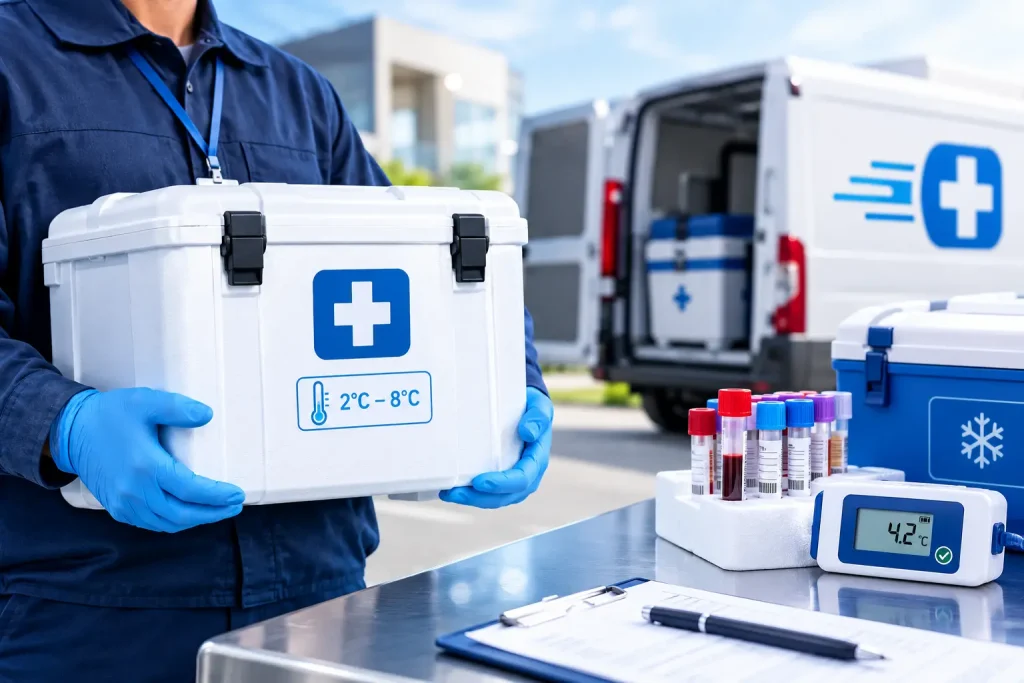
To maintain sample integrity and enable trustworthy laboratory testing, medical specimens must be transported in the proper environmental conditions. Temperature-controlled specimen transport lowers the possibility of temperature-related sample deterioration, rejection, or testing delays by helping to maintain the necessary temperature from collection and pickup to laboratory delivery.
Choosing the right medical courier service is a crucial step in the specimen transportation process for hospitals, clinics, research centers, diagnostic labs, and healthcare professionals. Healthcare teams may make well-informed decisions regarding packaging, handling, and delivery by having a thorough understanding of ambient, refrigerated, and frozen transport requirements.
What Is Temperature-Controlled Specimen Transport?
Temperature-controlled specimen transport is the process of moving medical samples under specified temperature coThe process of transporting medical samples under predetermined temperature conditions to help maintain their stability during transportation is known as temperature-controlled specimen transport. Samples may need to be kept at ambient temperature, refrigerated, or frozen, depending on the specimen and laboratory testing needs.
The stability requirements for various specimens vary. At one temperature, a sample that is still appropriate for testing may degrade or lose its suitability. As a result, medical personnel should adhere to the receiving laboratory’s handling and collection instructions.nditions to help preserve their stability during transit. Depending on the specimen and laboratory testing requirements, samples may need to remain at room temperature, refrigerated, or frozen.
Different specimens have different stability requirements. A sample that remains suitable for testing at one temperature may deteriorate or become unsuitable at another. Therefore, healthcare professionals should follow the collection instructions and handling guidelines provided by the receiving laboratory.
Professional medical courier services support this process through appropriate transport equipment, trained personnel, secure handling procedures, and timely deliver
Why Is Temperature-Controlled Specimen Transport Important?
Maintaining the required temperature during medical specimen delivery helps protect sample quality and supports the laboratory testing process.
1. Helps Preserve Specimen Integrity
Temperature changes can affect certain biological samples and the substances being measured. Maintaining the required conditions helps reduce the risk of sample degradation and supports reliable laboratory analysis.
2. Reduces the Risk of Sample Rejection
Laboratories may reject specimens that do not meet their acceptance criteria, including temperature or handling requirements. Appropriate packaging and temperature monitoring can help reduce preventable transportation-related issues.
3. Supports Timely Laboratory Results
When specimens arrive outside acceptable conditions, healthcare teams may need to recollect samples or repeat parts of the testing process. Proper specimen transport helps reduce avoidable delays and supports more efficient laboratory workflows.
4. Supports Healthcare and Diagnostic Operations
Hospitals, laboratories, clinics, and research facilities depend on coordinated specimen collection and delivery. Reliable transportation helps connect these facilities with the laboratories responsible for analyzing their samples.
What Are the Three Common Temperature Categories for Specimen Transport?
The three common temperature categories are ambient, refrigerated, and frozen. The correct category depends on the specimen type, the test being performed, and the receiving laboratory’s instructions.
1. Ambient Specimen Transport
Ambient transport generally refers to transporting specimens within a specified room-temperature range. A commonly used range is approximately 15–25°C (59–77°F), although individual laboratory requirements may differ.
Ambient does not mean that specimens can be left exposed to extreme heat, direct sunlight, or cold overnight conditions. Insulated containers and suitable packaging may help protect temperature-sensitive samples during transit.
Best practice: Confirm the required temperature range before collection and use packaging appropriate for the specimen and expected transport conditions.
2. Refrigerated Specimen Transport
Refrigerated specimen transport commonly uses a range of 2–8°C (36–46°F), when specified by the receiving laboratory. Insulated coolers and suitable refrigerant packs can help maintain the required conditions.
Specimens should not automatically be placed directly against frozen packs. Direct contact may freeze samples that must remain refrigerated, potentially affecting their suitability for testing.
Best practice: Prepare the cooler and refrigerant packs appropriately, separate specimens from direct contact with frozen packs when required, and verify the temperature requirements for each sample.
3. Frozen Specimen Transport
Some specimens require frozen transportation, often at approximately –20°C (–4°F) or colder. The exact temperature depends on the specimen, test method, and laboratory instructions.
Certain shipments may require dry ice or specialized frozen transport containers. Dry ice is solid carbon dioxide and must be handled according to applicable safety and transport requirements. Packaging must allow carbon dioxide gas to escape; dry ice must never be placed in an airtight container.
Best practice: Confirm the required frozen temperature, select appropriate packaging, and ensure that personnel handling the shipment understand the applicable dry ice safety requirements.
How to Choose the Right Temperature for Medical Specimens
Selecting the correct temperature is one of the most important steps in preparing a medical specimen for transportation.
Healthcare teams should:
- Review the receiving laboratory’s specimen collection and handling manual.
- Confirm whether the sample requires ambient, refrigerated, or frozen conditions.
- Check whether a maximum collection-to-delivery time applies.
- Select packaging and temperature-control materials suitable for the specimen.
- Keep specimens properly identified and separated when different temperature conditions are required.
- Document relevant collection, pickup, and delivery information according to facility procedures.
There is no single temperature range that is appropriate for every medical specimen. The receiving laboratory’s requirements should always take priority over general guidance
Best Practices for Temperature-Controlled Specimen Packaging
Correct packaging helps protect medical specimens from physical damage, leakage, contamination, and temperature fluctuations.
Use Appropriate Insulated Containers
Choose transport containers designed for the required temperature range and anticipated journey duration. Packaging should be suitable for the specimen and the environmental conditions expected during transit.
Prepare Refrigerant Packs Correctly
For refrigerated shipments, prepare cooling materials according to the packaging instructions. Prevent direct contact with frozen packs when this could cause unwanted freezing.
Separate Different Temperature Categories
Ambient, refrigerated, and frozen specimens may require different containers or compartments. Clear separation helps reduce the risk of incorrect storage conditions.
Use Suitable Leak-Proof Packaging
Biological specimens must be packaged according to their classification and applicable regulations. Certain infectious substances require specific packaging systems, such as triple packaging, with requirements depending on the shipment category.
Minimize Unnecessary Delays
Reducing the time between collection, courier pickup, and laboratory delivery can help protect specimens that are sensitive to time or temperature.
Maintain Accurate Records
Where required, record pickup and delivery times, temperature information, specimen identifiers, and handover details. These records can help facilities investigate transportation issues and maintain traceability.
What Should Healthcare Facilities Look for in a Medical Courier Service?
Choosing a medical courier involves more than selecting the fastest delivery option. Healthcare facilities should consider whether the provider can meet their specimen handling, temperature, timing, and documentation requirements.
- Temperature-control capability: Appropriate containers and equipment for ambient, refrigerated, or frozen shipments.
- Trained personnel: Staff who understand relevant specimen-handling procedures and transportation requirements.
- Reliable pickup and delivery: Coordinated routes and scheduling to help meet required delivery windows.
- Shipment traceability: Appropriate scanning, tracking, and chain-of-custody procedures where available.
- Regulatory awareness: Procedures aligned with applicable transportation and packaging requirements.
- Responsive communication: Clear updates and a process for handling delays or unexpected conditions.
Healthcare facilities should confirm the provider’s actual capabilities and procedures before arranging specialized or regulated shipments.
How Elite BioTransport Supports Medical Specimen Transportation
Elite BioTransport provides medical courier and healthcare transportation services for facilities that need dependable specimen delivery. Temperature-sensitive shipments require careful planning, appropriate handling, and coordination between the sending facility, courier, and receiving laboratory.
When evaluating a transportation provider, healthcare facilities should discuss the specific specimen types they ship, required temperature ranges, delivery timelines, packaging requirements, and any documentation or tracking needs.
For shipments requiring specialized handling, confirm the availability of the appropriate equipment and procedures before scheduling pickup.
To learn more about available transportation options, visit the Elite BioTransport Services page or contact the company to discuss your medical courier requirements.